October 26, 2026
VR in Community Colleges: The Future of Workforce Training
Community colleges are using VR to expand training capacity, cut costs, and prepare students for high-demand careers in manufacturing, healthcare, and trades.
Community colleges and technical schools train nearly half of all U.S. undergraduates, yet they operate on a fraction of the budget that four-year institutions enjoy. As industries from manufacturing to healthcare face widening skills gaps, these institutions need scalable, cost-effective ways to prepare students for high-demand careers. VR workforce training in community colleges is emerging as one of the most promising solutions to that challenge.
The numbers underscore the urgency. The Manufacturing Institute projects that 2.1 million manufacturing jobs could go unfilled by 2030, while the American Hospital Association warns of a healthcare worker shortage reaching 3.2 million by 2026. Community colleges sit at the center of this crisis, tasked with producing skilled graduates faster and in greater numbers than traditional training models allow.
Virtual reality changes that equation. By replacing expensive consumables with repeatable digital simulations, VR lets programs expand enrollment, reduce costs, and give students more practice hours without adding lab space or equipment. For career and technical education programs under pressure to deliver measurable outcomes, the technology is proving to be a practical answer rather than a futuristic promise.
The Training Challenge Community Colleges Face
Community colleges and technical schools serve as the primary pipeline for skilled workers across dozens of industries. According to the American Association of Community Colleges, 41% of all U.S. undergraduates attend community colleges, and a significant share pursue career and technical education credentials. The demand on these institutions continues to grow as employers struggle to fill skilled positions.
The core problem is one of resources. The average community college spends roughly $14,000 per full-time student compared to more than $40,000 at four-year universities. Equipment for technical programs, including CNC machines, welding stations, automotive diagnostic tools, and simulation labs, often costs hundreds of thousands of dollars per discipline. Facilities require capital investment, ongoing maintenance, and dedicated floor space that many campuses simply cannot expand.
At the same time, industry is evolving faster than curriculum budgets can keep pace. Manufacturing equipment incorporates new automation and digital controls. Automotive systems rely on advanced electronics that require specialized diagnostic tools. Healthcare procedures demand familiarity with devices and techniques that change year over year. When training environments fall behind workplace conditions, graduates arrive unprepared and employers lose confidence in the pipeline.
These constraints create a bottleneck. Programs cap enrollment because lab seats are limited. Students wait semesters to access hands-on training. Consumable materials drive up per-student costs. The result is fewer graduates entering the workforce at exactly the moment more are needed.
How VR Workforce Training Solves the Capacity Problem
Virtual reality addresses these constraints directly. Instead of requiring one physical machine per student, VR delivers realistic 3D simulations that multiple learners can access simultaneously. Students interact with virtual equipment, practice procedures, and build skills in a risk-free environment before ever touching physical tools.
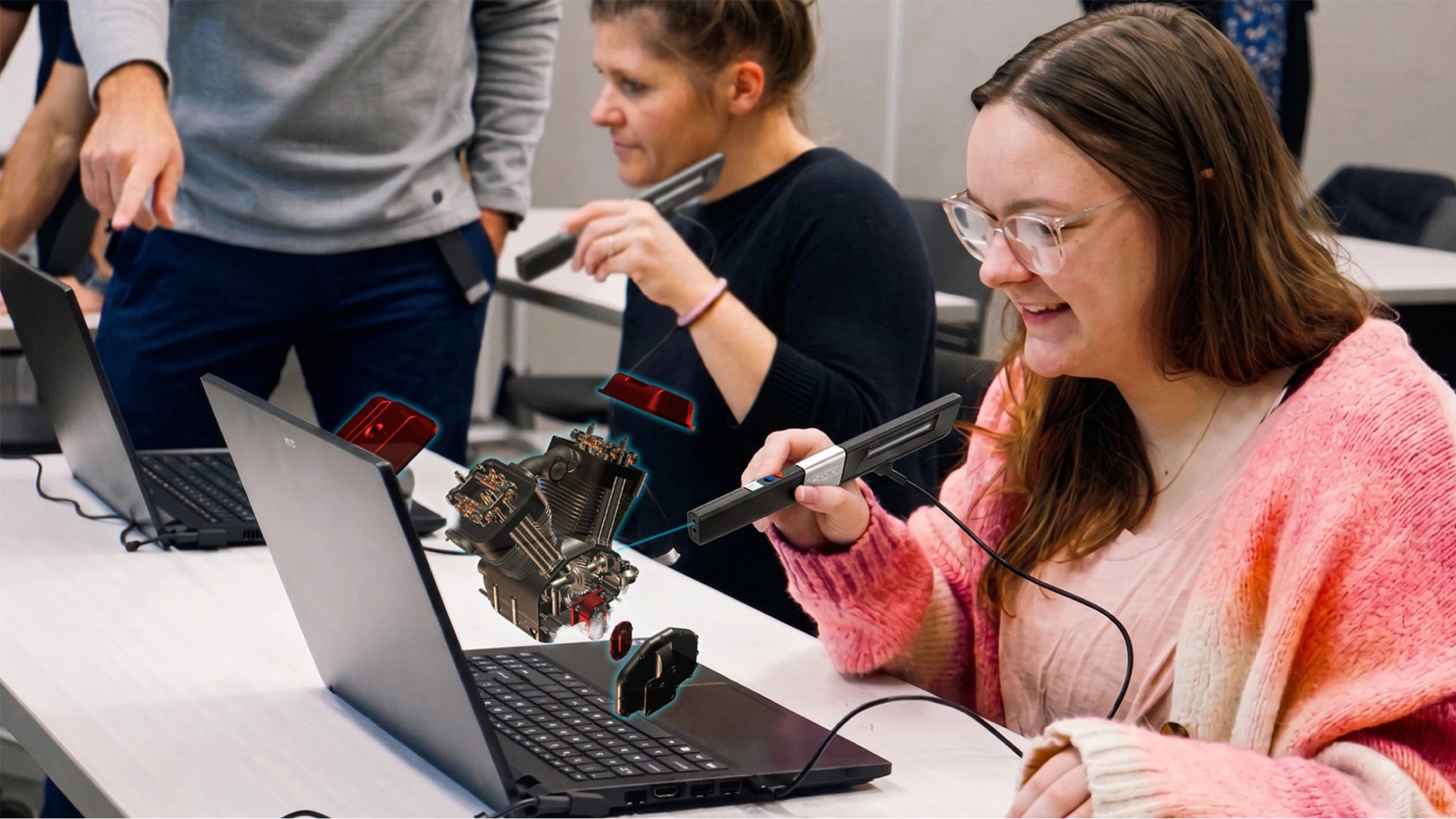
zSpace takes a distinctive approach to immersive learning. Rather than isolating students inside headsets, zSpace uses screen-based augmented and virtual reality with a stylus interface. Students see and manipulate 3D objects on their display while staying connected to instructors and classmates. The system works offline, making it practical for rural campuses and facilities with limited bandwidth.
This design matters for community college environments. Headset-based VR introduces hygiene concerns in shared labs, requires dedicated supervision, and limits the collaborative learning that technical programs depend on. Screen-based AR/VR eliminates those barriers while preserving the spatial understanding and hands-on interaction that make immersive learning effective.
The practical benefits for CTE programs are significant:
- Expanded enrollment without expanded facilities. Virtual lab stations let programs add seats without building new physical labs.
- Reduced consumable costs. Welding wire, machining stock, medical supplies, and automotive parts are expensive. VR lets students practice procedures dozens of times before using physical materials.
- Extended practice hours. VR stations can operate outside normal lab hours, giving students evening and weekend access for self-directed practice.
- Safer skill development. Students build competence with dangerous equipment or procedures in a consequence-free environment before transitioning to real-world application.
VR Applications Across CTE Disciplines
The versatility of VR training makes it applicable across the full range of career and technical education programs that community colleges offer.
Manufacturing and Machining
Modern manufacturing demands proficiency with CNC equipment, robotic systems, and precision measurement tools that cost tens of thousands of dollars each. VR lets students practice complex machine setup, toolpath programming, and quality control procedures without risking damage to expensive equipment or wasting raw materials. Programs using VR-integrated curricula report that students arrive at physical machines with stronger foundational skills and make fewer costly errors during initial hands-on work.
Healthcare and Allied Health
Allied health programs face acute capacity constraints driven by limited clinical placements. VR simulations supplement clinical hours by giving students access to anatomy visualization, patient assessment scenarios, and procedural practice that would otherwise require a clinical site. The California Board of Registered Nursing now permits up to 50% of clinical hours to be completed via simulation, a policy shift that reflects growing confidence in immersive training quality.
Automotive Technology
Vehicle systems have grown far more complex than what a typical training bay can expose students to. VR automotive applications let students visualize and interact with electronic control systems, hybrid powertrains, and advanced diagnostics in ways that disassembling a single training vehicle cannot match. Students develop stronger diagnostic reasoning because they can explore multiple failure modes and system configurations in a single session.
Welding Technology
Welding programs face some of the highest consumable costs in technical education. Wire, gas, plate stock, and electrode costs add up quickly when students are learning basic techniques. VR welding simulators let students develop proper hand position, travel speed, and arc control before they strike their first real arc. The result is less wasted material and faster progression to quality welds.
Measurable Outcomes for CTE Programs
The case for VR in community college CTE programs rests on measurable improvements across multiple dimensions.
Cost reduction. Programs integrating VR into their curricula consistently report significant reductions in consumable and material expenses. Welding programs see some of the largest savings, with material costs dropping substantially once students complete initial skill-building virtually. Across disciplines, the pattern holds: fewer wasted materials, less equipment wear, and lower facility maintenance costs.
Enrollment capacity. Because VR stations require less physical space than full equipment setups and can serve students on flexible schedules, programs expand capacity without proportional facility investment. Institutions that have adopted VR-integrated models report the ability to serve more students per term within their existing footprint.
Student performance. Research on immersive learning consistently shows advantages in knowledge retention and skill transfer. A growing body of peer-reviewed research supports the finding that students who practice in VR environments develop stronger spatial understanding and procedural confidence, translating to better performance when they transition to hands-on work.
Completion rates. Flexible VR access, particularly extended lab hours, helps part-time and working students stay on track. When students can practice on their own schedule rather than competing for limited lab time during class hours, fewer drop out due to scheduling conflicts.
Funding VR Workforce Training Programs
The initial investment in VR technology is a common concern for budget-constrained institutions. Several established funding pathways make implementation accessible.
Perkins V Funding
The Strengthening Career and Technical Education for the 21st Century Act (Perkins V) specifically supports technology investments that improve CTE program quality. VR equipment and software that align with recognized CTE program standards qualify for Perkins funding, and many states have approved VR-related expenditures under their Perkins plans.
Industry Partnerships
Employers facing skills shortages increasingly invest in the training pipeline. Manufacturing consortia, healthcare systems, and trade associations sponsor VR equipment at community colleges aligned with their hiring needs. These partnerships benefit both sides: employers get better-prepared graduates, and institutions stretch their technology budgets further.
Consortium and Shared-Resource Models
Groups of community colleges can pool purchasing power, content development, and technical support. Multi-institution procurement improves pricing, while shared content libraries give each campus access to a broader range of training applications than it could develop alone.
Federal and State Grants
NSF Advanced Technological Education grants, Department of Labor workforce innovation programs, and state-level technology enhancement grants all represent viable funding sources. Institutions that frame VR adoption around measurable workforce outcomes, such as enrollment growth, completion rates, and employer satisfaction, tend to build the strongest grant applications.
Making VR Work: Implementation That Sticks
Technology alone does not transform training. The community colleges seeing the strongest results share a few common implementation practices.
Hybrid sequencing. The most effective programs use a deliberate progression: conventional instruction to build conceptual understanding, followed by VR simulation to develop procedural skill, followed by hands-on application with physical equipment. This sequence builds confidence and reduces errors at each stage.
Faculty development. Instructors need support to integrate VR effectively into their teaching. zSpace provides professional development that focuses on pedagogical strategy rather than just button-pressing, helping faculty design learning sequences that maximize the technology's impact.
Flexible access. Programs that extend VR lab hours beyond the standard class schedule see the biggest gains in student completion. Evening and weekend access, even in a self-directed format, gives working students the practice time they need without requiring additional instructor staffing.
Assessment integration. VR platforms that track student performance data give instructors actionable insight into where individual students need additional support. This data-driven approach lets programs intervene early rather than discovering skill gaps at the end of a course.
Building the Workforce Pipeline
Community colleges and technical schools are the backbone of America's skilled workforce pipeline. The challenges they face, including tight budgets, aging equipment, and surging demand, are real and growing. VR workforce training does not eliminate those challenges, but it gives institutions a practical tool to expand capacity, improve outcomes, and serve more students within the resources they have.
For CTE programs looking to prepare students for careers in manufacturing, healthcare, automotive technology, and the trades, VR is no longer experimental. It is a proven approach backed by measurable results and supported by established funding pathways. The institutions that adopt it now will be best positioned to meet the workforce demands of the next decade.
To explore how zSpace VR solutions can strengthen your technical education programs, visit zSpace case studies or request a consultation.